



60 Years in Transit: The Iconic Van That Keeps Moving Forward
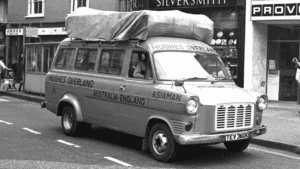
The Ford Transit’s story begins in the mid‑1960s in England under the codename “Project Redcap”, with contributions from the future Ford CEO Sir Alex Trotman. Rather than launching under the earlier candidate name “V‑Series,” the iconic name Transit was chosen at the last minute. This freshly‐built van first rolled off the production line at Ford’s Langley plant in Berkshire on August 9, 1965, as a modest short‑wheelbase model with a 1,344‑lb payload, priced at £542. Contrast that with a 15‑seat Custom bus variant, which cost up to £997 plus tax, roughly $2,785 at the time. Just a few years later, in April 1971, Ford introduced the Transit Supervan Mk 1, a high‑performance showpiece based on the legendary GT40 and powered by a 5.0‑liter V8 engine, capable of reaching 149 mph.
Milestones in Production and Durability
By 1976, a mere decade since its launch, Europe celebrated the assembly of the one‑millionth Transit. Fast forward to today, and the Transit has seen over 13 million units built worldwide since 1965, with more than 1.5 million coming off the line at Kansas City Assembly since U.S. production began in 2014. Such numbers underscore the Transit’s huge success and ability to serve markets across continents.
Transit’s toughness was definitively proven in a bizarre incident in October 1985: a Kombi variant was trapped in 16 feet of snow on a Spanish mountain and left abandoned for six months. When its owner returned in spring, the vehicle started on the very first try—an apt testament to its rugged build—especially fitting given that 98% of all U.S. Transits sold are still on the road.
Pop Culture Presence
Though the Transit is no stranger to film, it’s rarely involved in car chases. One exception: Michael Caine drove one in the 1987 movie The Fourth Protocol. Another especially memorable moment occurred in 2005, when the late German racer Sabine Schmitz drove a Transit SportVan around the Nürburgring in just over 10 minutes for the BBC’s Top Gear. The Transit’s cultural reach even extends into gaming—fans of the 2018 racing game Forza Horizon 4 can drive a remarkably detailed virtual replica of the Mk 1 Transit, created from hundreds of photos of one of Ford’s heritage units.
Electrification and Cutting‑Edge Versions
The Transit has entered the electric age. In 2022, Ford unveiled the E‑Transit in the U.S.—its first full‑size electric van—produced alongside traditional combustion models at Kansas City Assembly and later in Europe. As of 2024, the E‑Transit has become America’s best‑selling electric commercial van, based on registration data.
The electrified evolution doesn’t stop there. In 2023, Ford introduced the spectacular SuperVan 4.2, based on the E‑Transit Custom. This one‑off, ultra‑high‑performance machine boasts 1,400 hp from three electric motors and generates 2.2 tons of downforce at 150 mph. It raced up Pikes Peak in Colorado, showcasing both the performance potential and technological prowess of Ford’s electric platform.
Community, Innovation & Legacy
The Transit is more than just a commercial vehicle—it has become a part of communities and creative outreach. In 2021, Ford’s esports team, Team Fordzilla, transformed a Transit into a fully‑equipped gaming van complete with Xbox consoles and wheelchair access, visiting children’s hospices to bring joy and entertainment. Meanwhile, Ford’s own teams meticulously documented the classic Mk 1 Transit to preserve its legacy: in preparation for virtual modeling, they took 1,000 photographs to capture every hinge and bolt for gaming and historical archiving
From its humble beginnings in a British production plant, through pop culture cameos, remarkable performance build‑outs, and mass electrification, the Ford Transit has continually evolved over 60 years to remain relevant. Whether battling snowbursts, starring in hit movies and games, or charting the future of electric vans, it has proven itself a durable, adaptable, and beloved commercial workhorse. Its ongoing innovations—especially in electric propulsion—underline its readiness for the next chapter in mobility.

0 comment(s) so far on 60 Years in Transit: The Iconic Van That Keeps Moving Forward